


 Tiếng Việt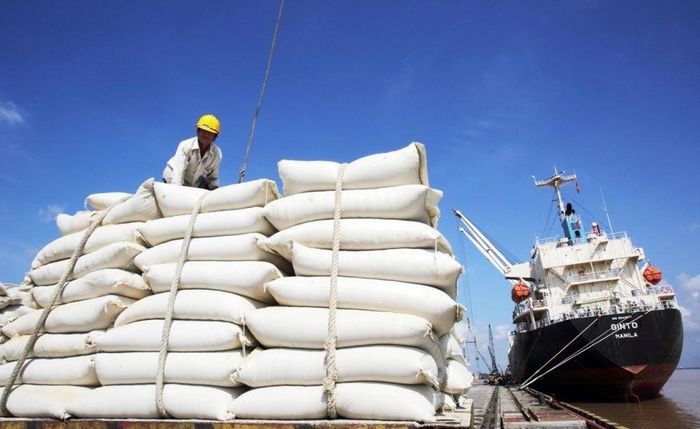
Vietnam is one of the world’s leading rice-exporting countries, supplying high-quality rice in a wide range of varieties to markets such as Indonesia, the Philippines, the Middle East, and Africa. In addition to traditional markets, Vietnamese rice is also exported to highly regulated markets, including the European Union (EU), Japan, South Korea, and China.
To bring Vietnamese rice to international markets, exporters must not only ensure product quality and variety but also comply with the complete rice export process, from sourcing and processing to customs clearance, transportation, and final delivery.
A standardized rice export process helps businesses minimize risks, ensure on-time delivery, and meet the specific requirements of each destination market.
In today’s article, BÔNG LÚA VIỆT provides a detailed guide to the rice export process from Vietnam.
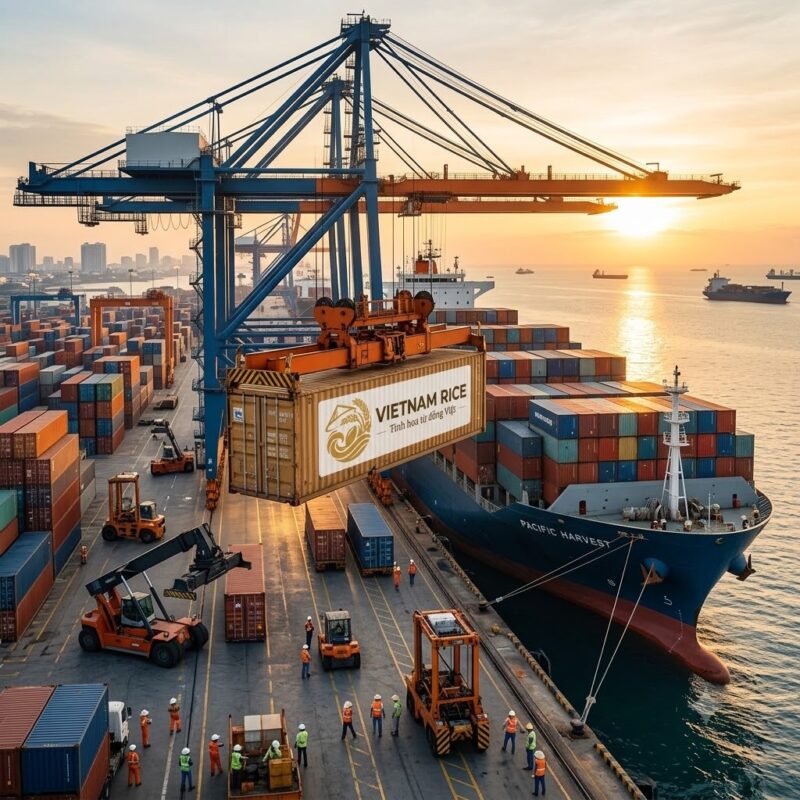
Why Do Businesses Need to Understand the Rice Export Process?
To bring Vietnamese rice to international markets, exporters must ensure that their products meet applicable quality standards while complying with the legal and technical requirements of each importing country.
The rice export process is more than a series of administrative procedures. It is also an essential framework that helps exporters maintain product quality, build credibility, and meet the requirements of international buyers.
1. Compliance with Legal Requirements
Each country has its own regulations governing agricultural imports. In particular, markets with strict food safety and rice quality requirements may require a more comprehensive set of documents and certifications.
When exporting rice, businesses must prepare all required documentation in accordance with Vietnamese regulations and the requirements of the destination market. Under current Vietnamese regulations, enterprises engaging in rice export activities are required to obtain a Certificate of Eligibility for Rice Export Business.
To obtain this certificate, a company must be legally established under Vietnamese law, have appropriate registered business activities, and comply with applicable regulations concerning rice storage, circulation, and food safety.
2. Meeting Import Market Requirements
Rice quality standards vary from country to country. Exporters must ensure that their products meet the specific requirements of each destination market.
Certain markets impose strict requirements on technical parameters such as pesticide residues, phytosanitary compliance, food safety, and traceability.
Understanding these requirements enables exporters to prepare the appropriate rice varieties, specifications, packaging, and documentation for each individual market and buyer.
Read more: Rice Export Standards: Requirements for Exporting Rice to International Markets
3. Minimizing Export Risks
Rice export transactions often involve significant contract values and multiple complex stages. A thorough understanding of the export process helps businesses minimize legal, payment, logistics, and contractual risks that may arise during the execution of an international sales contract.
4. Optimizing Costs and Building Business Credibility
A well-managed rice export process enables businesses to control their budgets, minimize unexpected expenses, and improve operational efficiency.
At the same time, professional export procedures are an important foundation for building a strong brand reputation and establishing long-term relationships with international buyers and business partners.

Requirements for Exporting Rice from Vietnam
To participate in the Vietnam rice export market, businesses need more than access to high-quality agricultural products. They must also meet legal requirements, maintain appropriate processing and storage facilities, and comply with relevant quality and food safety standards.
1. Legal Requirements
To conduct rice export activities on a stable and compliant basis, an enterprise must be legally established under Vietnamese law, have appropriate business lines registered for agricultural product export activities, and obtain a Certificate of Eligibility for Rice Export Business issued by the Ministry of Industry and Trade of Vietnam.
Exporters should also regularly monitor updates from relevant regulatory authorities to ensure compliance with current regulations concerning rice exports and national food security.
2. Stable Rice Supply
Exporters need a stable and reliable supply of rice that can meet the required quantity, quality, and specifications.
Businesses should establish cooperation agreements or direct supply relationships with agricultural cooperatives and farmers to ensure a consistent supply.
Beyond sourcing, exporters should closely manage the use of fertilizers and crop protection products from the cultivation stage to ensure compliance with food safety requirements.
A proper traceability system should also be established, including information on growing areas and production activities, so that the origin of the rice can be verified whenever required by authorities or international buyers.
3. Rice Processing and Storage Facilities
To maintain consistent rice quality for export markets, businesses should operate or cooperate with qualified storage and processing facilities.
Rice warehouses should provide appropriate storage conditions, including adequate ventilation and protection against moisture, mold, pests, and contamination.
Rice milling and processing facilities should have sufficient capacity to meet applicable requirements. Exporters may also need equipment for sorting broken or damaged grains, as well as automated or semi-automated packaging systems to meet different packaging specifications requested by international buyers.
4. Rice Quality Standards
Rice exported to international markets must comply with applicable technical specifications, including moisture content, broken rice percentage, foreign matter, grain quality, and other parameters specified in the sales contract.
Products must also meet food safety requirements relating to phytosanitary controls and maximum residue limits (MRLs) for pesticides, heavy metals, microorganisms, and other regulated substances.
For access to demanding international markets such as the EU, the United States, and Japan, businesses may apply internationally recognized food safety and quality management systems such as HACCP, ISO 22000, BRCGS, and GlobalG.A.P., depending on the product and market requirements.
Read more: Vietnam Rice Export Standards and Requirements
Rice Export Process from Vietnam
Following each stage carefully helps exporters control timelines, maintain product quality, and minimize errors.
Although individual businesses may adjust their procedures according to their scale, product, and target market, a typical Vietnam rice export process generally includes the following key steps:
Step 1: Confirm Buyer Requirements and Negotiate the Sales Contract
- Confirm the rice variety, specifications, quantity, quality requirements, and packaging.
- Negotiate the price, delivery schedule, Incoterms, port of loading, destination port, and payment terms.
- Agree on inspection procedures, applicable legal terms, governing law, and contractual penalties or remedies in case of non-compliance.
Step 2: Prepare the Rice Supply
- Source paddy or rice from qualified growing areas, cooperatives, or approved suppliers.
- Check key quality parameters such as moisture content, broken grains, yellow/chalky grains, foreign matter, and other agreed specifications.
- Record growing-area information and harvest records to support product traceability.
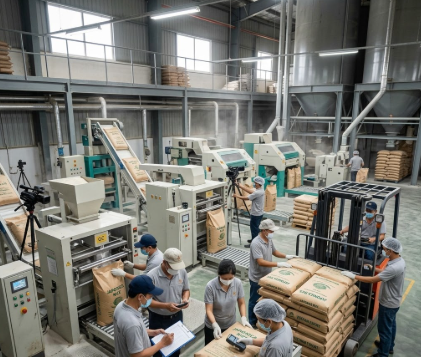
Step 3: Rice Processing and Packaging
- Dry, mill, polish, and process the rice to meet the required quality and appearance specifications.
- Sort and grade the rice according to the buyer’s requirements.
- Pack the rice according to the agreed net weight and packaging specifications.
- Ensure that packaging and labels contain all required information for the destination market.
Step 4: Quality Inspection and Certification
- Arrange third-party inspection, where required, to verify parameters such as moisture, purity, grain quality, and pesticide residues.
- Register the shipment for phytosanitary inspection with the competent plant protection authority when required.
- Apply for a Certificate of Origin (C/O) through the competent authority when required by the buyer or applicable trade agreement.
- Obtain any additional certificates required by the destination market or buyer.
Step 5: Prepare Export Documents and Complete Customs Declaration
Typical export documentation may include:
- Commercial Invoice
- Packing List
- Sales Contract
- Phytosanitary Certificate
- Certificate of Origin
- Quality and Weight Certificate, where applicable
- Other documents required by the destination market
The exporter submits the customs declaration through Vietnam’s VNACCS/VCIS electronic customs system, receives the customs channel result, and completes document or physical inspection when applicable.
Once all requirements have been fulfilled, the shipment can proceed to customs clearance.
Step 6: International Transportation
- Contact the shipping line or freight forwarder to book containers and obtain the vessel schedule.
- Arrange container stuffing and cargo loading according to the agreed shipping plan.
- Receive the Bill of Lading (B/L) and complete the relevant customs and export procedures.
- Monitor the shipment during transit and coordinate with the buyer and logistics partners when necessary.
Step 7: Payment and Completion of the Export Transaction
- Submit the required document set to the bank or send the documents directly to the buyer according to the agreed payment terms.
- Follow up on payment and resolve any issues relating to quality claims, document discrepancies, or delayed payment.
- Retain all relevant export documentation for VAT refund procedures, accounting purposes, and potential post-clearance audits or inspections.
Documents Required for Rice Export from Vietnam
Export documentation is essential for customs clearance, international payment, and legal compliance.
Preparing complete, accurate, and consistent documentation helps exporters reduce processing time and minimize the risk of customs delays, payment discrepancies, and contractual disputes.
The main groups of documents required for rice exports generally include the following:
1. Rice Export Business License and Registration Documents
Certificate of Eligibility for Rice Export Business
A certificate issued by the competent authority in Vietnam confirming that the enterprise meets the applicable conditions for rice export activities.
Rice Export Contract Registration
Where applicable, the exporter must prepare the required registration documents for the rice export contract in accordance with Vietnamese regulations.
Copy of the Export Sales Contract
The signed commercial contract between the Vietnamese exporter and the international buyer, specifying the product, quantity, specifications, price, payment terms, delivery terms, and other contractual conditions.
2. Export Customs Documentation
Customs Declaration
An electronic document containing information about the export shipment submitted to the customs authority for customs clearance.
Commercial Invoice
A commercial document issued by the seller specifying the transaction value and other relevant information required for customs clearance and international payment.
Packing List
A detailed document showing the number of packages, net weight, gross weight, packaging method, and other cargo information.
Sales Contract
The legally binding agreement between the exporter and importer covering the rice specifications, price, payment terms, delivery conditions, and other contractual obligations.
3. Quality Inspection and Phytosanitary Documents
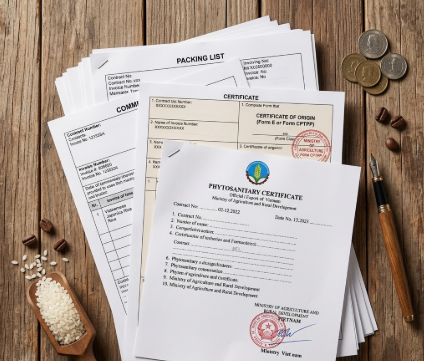
Phytosanitary Certificate
A certificate issued by the competent plant protection authority confirming that the shipment meets applicable phytosanitary requirements.
Certificate of Quality and Weight
A certificate issued by an independent inspection organization, where required by the buyer or contract.
Certificate of Origin (C/O)
A document certifying the origin of the exported rice. Depending on the destination country and applicable trade agreement, a C/O may allow the importer to benefit from preferential tariff treatment.
Important Considerations When Exporting Rice from Vietnam
In addition to following the standard rice export process, exporters should pay close attention to several critical factors to ensure smooth execution, timely delivery, and effective risk management.
1. Strict Quality Control
Establish a quality control system beginning at the raw material stage by working with qualified cooperatives, farmers, and growing areas.
Regularly monitor pesticide residues, heavy metals, microorganisms, and other relevant food safety parameters at the source to identify potential issues before the rice enters the processing stage.
Establish proper growing-area identification and packing-facility records where required to meet international traceability requirements.
2. Monitor the Regulations of Each Import Market
Import regulations can vary significantly between countries and may be updated regularly.
Exporters should closely monitor:
- Rice quality standards
- Food safety regulations
- Maximum residue limits (MRLs)
- Phytosanitary requirements
- Packaging requirements
- Labeling regulations
- Storage and transportation requirements
- Import permits and other market-specific requirements
This is particularly important when exporting rice to highly regulated markets such as the EU, United States, China, Japan, and South Korea.
3. Prepare Complete and Consistent Documentation
All information, including product name, quantity, weight, HS code, buyer and seller information, shipping details, and other key data, should be consistent across all export documents.
Exporters should also apply for the Certificate of Origin and Phytosanitary Certificate early enough to avoid delays in customs clearance or the delivery of shipping documents to the buyer.
4. Choose Reliable Shipping and Logistics Partners
Select reputable shipping lines and freight forwarders with proven experience in agricultural and food product logistics.
The container should be clean, dry, odor-free, and free from water leakage or contamination.
Where appropriate, use suitable moisture-protection materials and cargo preparation methods to minimize condensation, mold, and quality deterioration during ocean transportation.
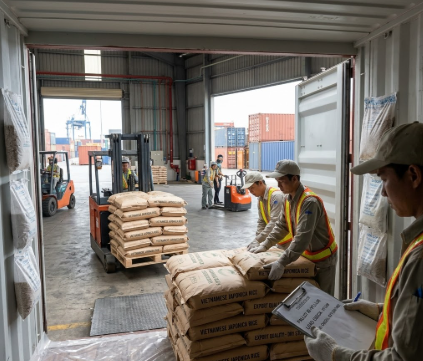
Exporters should also monitor vessel schedules and shipment status so that potential delays, transshipment issues, port congestion, or other logistics disruptions can be addressed promptly.
Conclusion
Rice export from Vietnam offers significant opportunities for businesses seeking to expand into international markets and increase the value of Vietnamese agricultural products.
However, successfully delivering Vietnamese rice to international buyers requires compliance with a wide range of requirements covering product quality, legal documentation, inspection, phytosanitary controls, customs procedures, logistics, and international payment.
Understanding the complete rice export process from Vietnam — from sourcing and processing to packaging, certification, customs clearance, transportation, and payment — enables exporters to minimize risks, control costs, improve operational efficiency, and strengthen their credibility in the global rice market.
If your business is looking for a reliable source of Vietnamese export rice that meets international quality requirements, or if you need support in selecting suitable rice varieties and preparing an export solution for a specific destination market, contact BÔNG LÚA VIỆT.
Our team is ready to support you in selecting suitable rice varieties, understanding export procedures, preparing the necessary documentation, and developing rice supply solutions tailored to your business requirements.
BONG LUA VIET – Your Partner for Vietnamese Rice and Agricultural Products.